A new trailer is not a guarantee of a safe trailer
There is a particular kind of confidence that comes with walking up to a nearly new trailer. The tires look fresh. The paint has not been scratched by a thousand questionable backing attempts. The doors haven’t been slammed by generations of impatient dockworkers. It is tempting to assume the equipment has not had enough time to become somebody else’s problem.
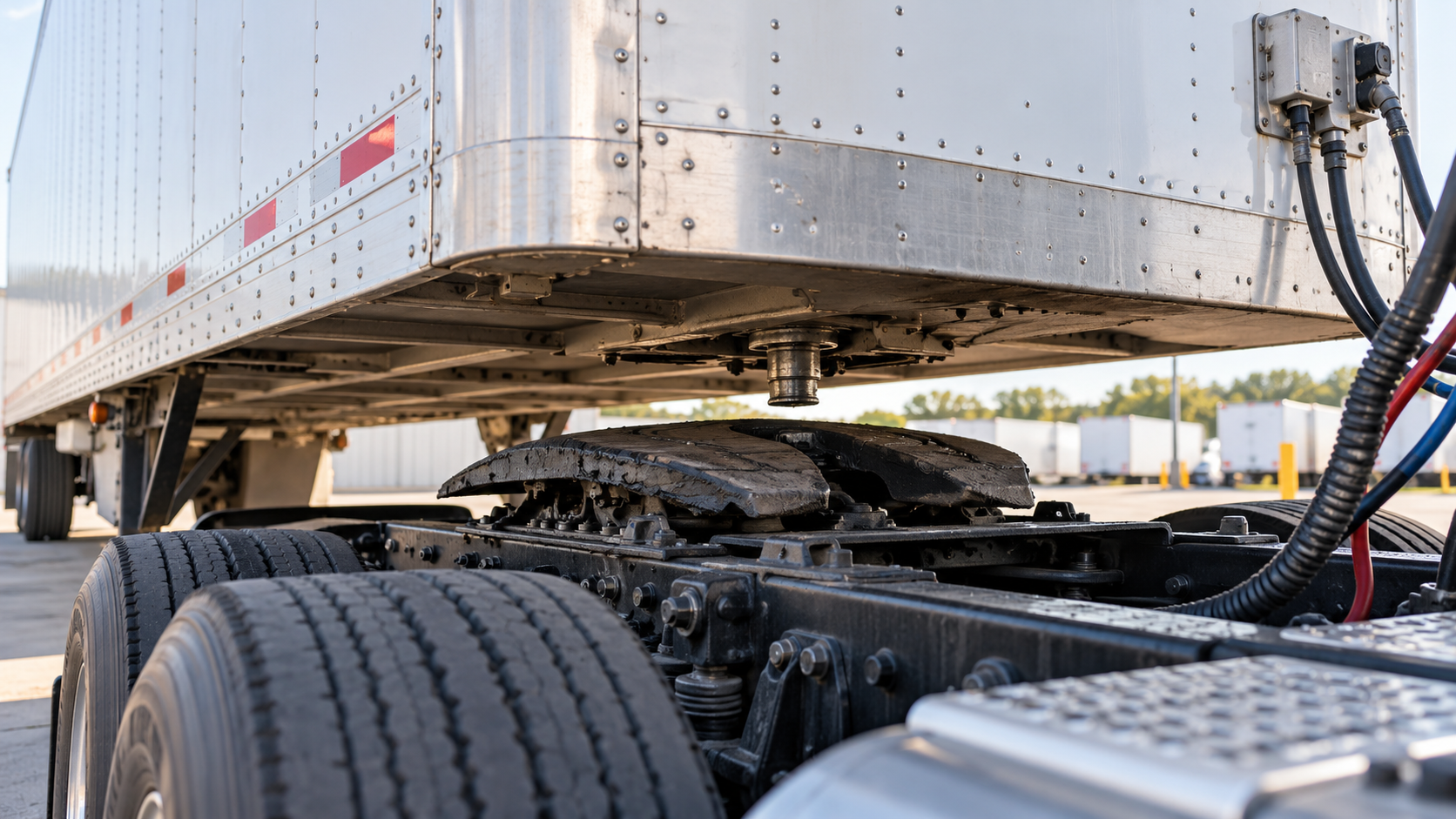
A newly reported Great Dane recall offers a useful reminder that a truck or trailer can leave the factory with a serious defect before anybody has put a meaningful number of miles on it. According to the National Highway Traffic Safety Administration recall record, Great Dane recalled certain 2027-model Champion dry van trailers because the upper coupler may contain an incorrect bottom plate. The risk is not merely cosmetic: the issue could prevent proper coupling, and an improperly coupled trailer can detach from the tractor.
The recall covers 69 trailers and carries a do-not-tow instruction. That’s a small number compared with the number of trailers running across the country, but it does not make the warning less important to somebody assigned to one of those units. For that driver, the relevant number is exactly one.
A recall like this is a useful example of what happens when manufacturing quality, carrier maintenance, driver inspections, and business pressure all meet at the fifth wheel. Each plays a part, and none can simply be substituted for the others. Let’s look at what the warning says, what it does not say, and what drivers and fleet managers should actually do with the information.
What Great Dane is recalling
The affected equipment consists of certain 2027 Great Dane Champion dry van trailers, according to NHTSA campaign 26V656000, reported on October 6, 2026 and covered in late-October trucking news. The recall description says the upper coupler may have an incorrect bottom plate installed. As a result, the kingpin may protrude in a way that prevents proper mating with a tractor’s fifth wheel.
The upper coupler is the connection assembly at the front underside of the trailer. The fifth wheel on the tractor engages the kingpin. When the connection is correct, the equipment can be operated within its design limits. When the geometry is wrong, the driver may be dealing with something a normal coupling procedure cannot safely fix.
The consequence described in the recall is plain: an improperly coupled trailer may detach, increasing crash risk. Owners were advised not to use affected trailers until the recall repair was completed. The announced remedy was inspection and replacement of the upper coupler assembly when needed, free of charge. Owner notification letters were expected in early December 2026; the recall itself exists now and should not be ignored until a letter arrives.
It is worth emphasizing what the recall does not establish. It does not mean every Great Dane trailer is unsafe. It does not mean every 2027 Champion has the problem. And it does not demonstrate that one of these trailers has already detached or caused a crash. The recall addresses a potential defect and the resulting danger before that outcome is allowed to occur.
The best starting point is the manufacturer’s recall information and NHTSA’s official VIN-based recall lookup. A model year and product name alone are not an adequate substitute for confirming a specific trailer’s status. If you handle fleet equipment, document the VIN and refer it to maintenance or the owner for a direct recall check.
Why this isn’t just another technical service bulletin
A driver may be tempted to treat recall stories like the usual long list of minor notices: something involving a bracket, a switch, or a paperwork correction that the maintenance shop will eventually sort out. This one deserves immediate attention because it concerns the connection between the power unit and the trailer. If the coupling is compromised, everything riding behind the cab becomes a potential hazard to everybody around the rig.
The distinction between an inconvenient defect and a no-go defect
matters. Nobody enjoys telling dispatch a trailer cannot move. Sometimes the load is already scheduled, the customer is impatient, and the next available trailer is not nearby. But a do-not-tow instruction isn’t a suggestion to ‘just be careful’ or to ‘give it a quick tug test and hope for the best.’ It is an instruction to keep the affected equipment out of service until the specified remedy has been completed.
Even good drivers can be put in an impossible position if a dispatch system treats equipment assignments as final before maintenance and safety conditions are checked. In a healthy operation, the driver can report a recall, identify a defect, and stop the movement without becoming the person blamed for every lost hour. That is easier to say in a conference room than it is when a broker is calling every five minutes. The practical answer still has to be the safe one.
If you’re handed an unfamiliar trailer, you should be able to find the VIN, identify the equipment, and know how to reach the party responsible for maintenance. When a manufacturer issues a safety recall, somebody should be checking the fleet rather than waiting for a driver to stumble across the notice on social media. And when a driver does flag an issue, there should be a clear procedure for holding the equipment and arranging repair or replacement.
The role of a pre-trip inspection
Let’s separate the duty to inspect from a fantasy that the driver can diagnose every hidden manufacturing defect. Federal regulation 49 CFR 392.7 requires a commercial driver to be satisfied that specified parts and accessories, including coupling devices, are in good working order before operating. That makes the coupling an essential part of the driver’s safety responsibilities.
Drivers typically check whether the fifth-wheel jaws appear properly engaged, whether the kingpin is secured, whether the trailer is correctly seated, and whether air and electrical connections are in place. A pull test and visual inspection can reveal many obvious problems. They are not replacements for an engineering assessment of an affected upper coupler that the manufacturer has instructed owners not to use.
That distinction is more than legal fine print. Drivers sometimes get told that the pre-trip should catch everything, which sounds comforting until you consider how much of a modern commercial vehicle is not visible during a walkaround. Inspections are essential, but safe operations also depend on manufacturing controls, maintenance records, recalls, service campaigns, and people who act on warning information.
A driver inspecting a unit already identified by VIN as affected should not attempt to prove the recall harmless by coupling and moving it. The appropriate course is to stop, notify the owner or maintenance department, and arrange the manufacturer’s repair process. If there is uncertainty about applicability, confirm it from the authoritative record, not from a quick guess based on appearance.
For fleet managers, this recall is also a test of communication. A useful recall workflow isn’t simply an email to the shop. It should identify the affected VINs, prevent the units from being dispatched, track completed repairs, and ensure drivers know which equipment has been cleared. Otherwise, the same warning can be discovered repeatedly by different drivers while the trailer keeps showing up on assignments.
How the fifth-wheel connection actually earns its reputation
Drivers love to debate the right order for lowering landing gear, checking the air lines, getting under a trailer, or performing a tug test. Everyone seems to have a story about a trainee who confidently announced they were hooked up and then discovered they were not. The jokes can be funny because the scenario is so recognizable. The actual outcome can be extremely serious.
The fifth-wheel connection is one of those mechanisms that should become boring precisely because the correct routine is performed every time. Experienced drivers don’t skip the check because it feels familiar. They check because familiar equipment can still surprise you, especially when someone else last handled the trailer.
This recall adds a different category of risk. A driver might carry out an ordinary procedure and still face an issue rooted in a component that was manufactured or installed incorrectly. That should be a reminder not to treat all coupling failures as driver incompetence. Some failures involve poor technique; some involve maintenance; and some involve manufacturing. Good investigations identify which facts apply, rather than blaming the most visible person by default.
This is why I wouldn’t use the recall to deliver another lecture about rookie drivers. A manufacturer has already identified a product issue and provided instructions. The useful conversation is whether the people who own, maintain, assign, and operate the equipment know about that instruction and will act on it before a load moves.
What drivers should do if the assigned trailer might be affected
First, confirm the identity of the equipment. A vague memory that somebody on YouTube mentioned a Great Dane recall is not enough. Record or photograph the trailer VIN in accordance with company policy and check the official manufacturer or NHTSA information. Campaign 26V656000 is the identifier associated with this specific issue.
Second, if the trailer is within the recall and the repair is not documented as completed, follow the do-not-tow instruction. Contact maintenance, the owner, or the designated safety representative. Do not take the trailer down the road in order to get the load moving, and do not assume an apparently successful coupling overrides the manufacturer’s warning.
Third, preserve a simple paper trail. Note the equipment number, VIN, what information you found, who was notified, and what instructions followed. This isn’t about creating drama; it’s about ensuring a time-sensitive safety issue doesn’t get lost between shifts or departments. A written record also makes it easier for the next driver to know why that equipment should not be assigned.
Fourth, don’t confuse a completed recall repair with the end of ordinary inspections. The repair addresses the manufacturer’s identified problem. Daily vehicle inspections remain necessary. Drivers should know how their company verifies recall work and how to report a new issue after a repair.
And finally, don’t wait until the next scheduled maintenance visit if a recall specifically instructs owners to stop using affected units. There is a difference between an issue that can be scheduled and a condition that makes equipment unsuitable for operation now. The exact manufacturer direction takes precedence over convenience.
The industry problem underneath the recall
The recall itself is narrowly defined: a relatively small group of trailers, a specific coupler component, and a manufacturer-supplied remedy. The broader industry question is how easily safety information reaches the person about to pull the trailer away from the dock.
A tractor can change drivers. A trailer can travel through several terminals. Fleets can use leased equipment, drop-and-hook networks, third-party maintenance, and customer yards. That complexity creates opportunities for a piece of information to fall through the cracks. The fleet office may know the recall exists while the driver assigned at midnight has never seen the notice.
A robust system should not depend on every individual driver following all of the trade press. It should prevent affected equipment from being scheduled, mark units out of service, and release them only after the repair is confirmed. The driver’s pre-trip then becomes one part of a larger safety chain, instead of the only defense against a problem created upstream.
There is also an important business reality. Carriers operate on tight schedules and often under significant cost pressure. A grounded trailer means a missed load, a replacement assignment, or a delay. Those costs are real. But the cost of ignoring a known connection defect can be far greater, especially if a trailer detaches in traffic. When somebody treats the safety hold as an inconvenience rather than a required step, the company is transferring the risk to people on the roadway.
This is one of those situations where drivers, safety managers, maintenance technicians, and company owners should have the same ultimate goal. Nobody benefits from a trailer being allowed to move when its manufacturer has said it should not.
A little perspective—and a question for the counter
There is no reason to turn this into a claim that the entire trailer manufacturing industry is falling apart. Manufacturers issue recalls for a reason: they are identifying a defect and specifying a fix. The fair question is how promptly owners act and how clearly the information is delivered to everyone affected.
But drivers do have a reason to be annoyed when the answer to a known equipment problem is ‘Can you just run it this once?’ That is exactly the kind of pressure that makes a sensible safety rule feel negotiable. The equipment doesn’t get safer because a delivery appointment is important.
If you’ve worked in a large drop-and-hook operation, I’d like to know whether your carrier has a good recall process. Can you check a trailer’s status without calling three departments? Does dispatch automatically know when equipment is grounded? And if you report a problem, does somebody actually remove the trailer from service—or does it reappear on the board with a different driver ten minutes later?
Those are the sorts of details that turn a technical recall into a useful conversation between people who live with the results. We don’t need to manufacture outrage. We need to take the warning seriously, make sure affected equipment stays parked, and ask whether the safety process is designed for the real world drivers operate in.
And for anybody who thinks 69 trailers isn’t a story worth noticing, here’s my response: tell that to the one driver who was about to hook to trailer number 69. A small recall can still be a very big deal when it’s your equipment.
The questions I’d put to veteran drivers and maintenance crews
There’s a huge difference between asking drivers to take coupling seriously and pretending that every equipment defect begins in the cab. A veteran who has hauled trailers for decades may have encountered a worn fifth wheel, a damaged kingpin, or a locking mechanism that behaved unexpectedly. A maintenance technician may be able to explain how coupling geometry is checked and what a manufacturer would replace. Those experiences are worth hearing, but we should keep them clearly distinguished from the specific defect Great Dane identified in this recall.
What would you want to know before picking up a trailer that had been held out of service? Would a generic sticker saying ‘checked’ satisfy you, or would you ask which component was repaired and whether a recall remedy had been signed off? Companies should make that information available without expecting drivers to decipher internal maintenance software on the shoulder of a highway.
I would also ask fleet managers whether they have a way to stop a recalled VIN from being reassigned automatically. It seems obvious until you think about how often equipment rotates between dispatchers, yards, and shifts. A trailer can look perfectly serviceable from a distance while being administratively unsafe to release. The right system catches that before the driver burns an hour driving across town to hook to it.
And I’d ask owner-operators how often they verify open recalls on trailers they purchase or lease. The tractor generally gets the attention because it has an engine and a dashboard full of warnings. The trailer may be treated as simple equipment, even though the consequences of a failed connection can be catastrophic. A good maintenance program gives both sides of the combination the attention they deserve.
What this recall can teach us about safety conversations
There is a tendency in trucking discussions to choose a villain before reading the details. Sometimes it’s the manufacturer, sometimes the maintenance shop, sometimes the carrier, and very often it’s the driver. That reflex makes for energetic comment sections but poor problem-solving. A more useful conversation starts by asking which layer of the safety process was supposed to prevent a hazard from reaching the highway.
In this case, the manufacturer identified a specific problem, made a recall filing, and described a remedy. The equipment owner is responsible for checking applicability and arranging the repair. The carrier needs a reliable method of preventing affected trailers from being dispatched. And the driver must perform required inspections and avoid operating equipment known to be unsafe. Those responsibilities connect rather than cancel one another out.
No single check should be treated as the complete answer. An inspection may reveal a loose connection. A VIN search may reveal a recall that an inspection would never detect. Maintenance records may show a repair was completed. A good operation makes those pieces available to the people making the next decision.
This is exactly the sort of thing that veteran drivers can explain to newer drivers without lecturing them. A rookie may know how to perform a textbook coupling inspection but not yet know how to challenge an unsafe equipment assignment, where to find a recall number, or what documentation to ask for. The answer shouldn’t be ‘you’ll figure it out.’ It should be a straightforward explanation from somebody who’s been there.
Nobody needs another dramatic announcement that truck safety is important. We need processes that still work at two in the morning, when dispatch is short a trailer and everybody is already annoyed. That’s where the real test happens.
Sources and verification
Official recall verification: NHTSA recall lookup (campaign 26V656000). Federal inspection requirement: 49 CFR 392.7. Contemporary reporting: Morning Overview and The Trucker. Specific VIN eligibility and repair status must be verified with NHTSA or Great Dane.